
 UGC Infra
Influencer marketing campaign examples: 9 proven tactics for mobile apps
Explore influencer marketing campaign examples that boosted app growth. Learn 9 proven strategies across TikTok, Instagram, and Reddit to boost installs.
Influencer marketing is no longer just about brand awareness. It has become a sophisticated performance channel essential for mobile app growth, directly driving user acquisition and boosting retention. Yet, many app marketers struggle to translate the potential of creator partnerships into scalable, ROI-positive results. The gap between seeing a viral campaign and building one yourself can feel immense. Generic advice and surface-level case studies often fail to provide the necessary strategic depth.
This guide moves past the hype to deliver a tactical playbook. We will dissect nine distinct influencer marketing campaign examples tailored specifically for app-based businesses. Each example provides a comprehensive breakdown, including the campaign's core objective, the creative strategy employed, and the performance metrics that mattered most. We will explore everything from Glossier's user-generated content machine to Duolingo's masterful trend hijacking on TikTok and targeted Reddit AMA strategies for community building.
Forget vague success stories. For each campaign, you will find:
- Behind-the-scenes analysis of why the strategy worked.
- Actionable takeaways you can apply immediately.
- Step-by-step guidance to help you replicate these models for your own app.
The goal is to equip you with a replicable framework for turning influencer collaborations into a predictable and powerful growth engine. We will provide the specific insights needed to move beyond one-off posts and build a sustainable influencer program that delivers measurable returns. Let's dive into the strategies that separate successful app campaigns from the noise.
1. Glossier's User-Generated Content & Micro-Influencer Strategy
Glossier built its beauty empire by turning customers into advocates, a prime example of a successful influencer marketing campaign that mobile app brands can replicate. The core of their strategy involves leveraging micro-influencers (creators with 10K-100K followers) and authentic user-generated content (UGC) to create a sense of community and trust. Instead of focusing on celebrity endorsements, Glossier identified and nurtured relationships with smaller creators whose audiences were highly engaged and aligned with the brand's minimalist, "skin first" aesthetic.
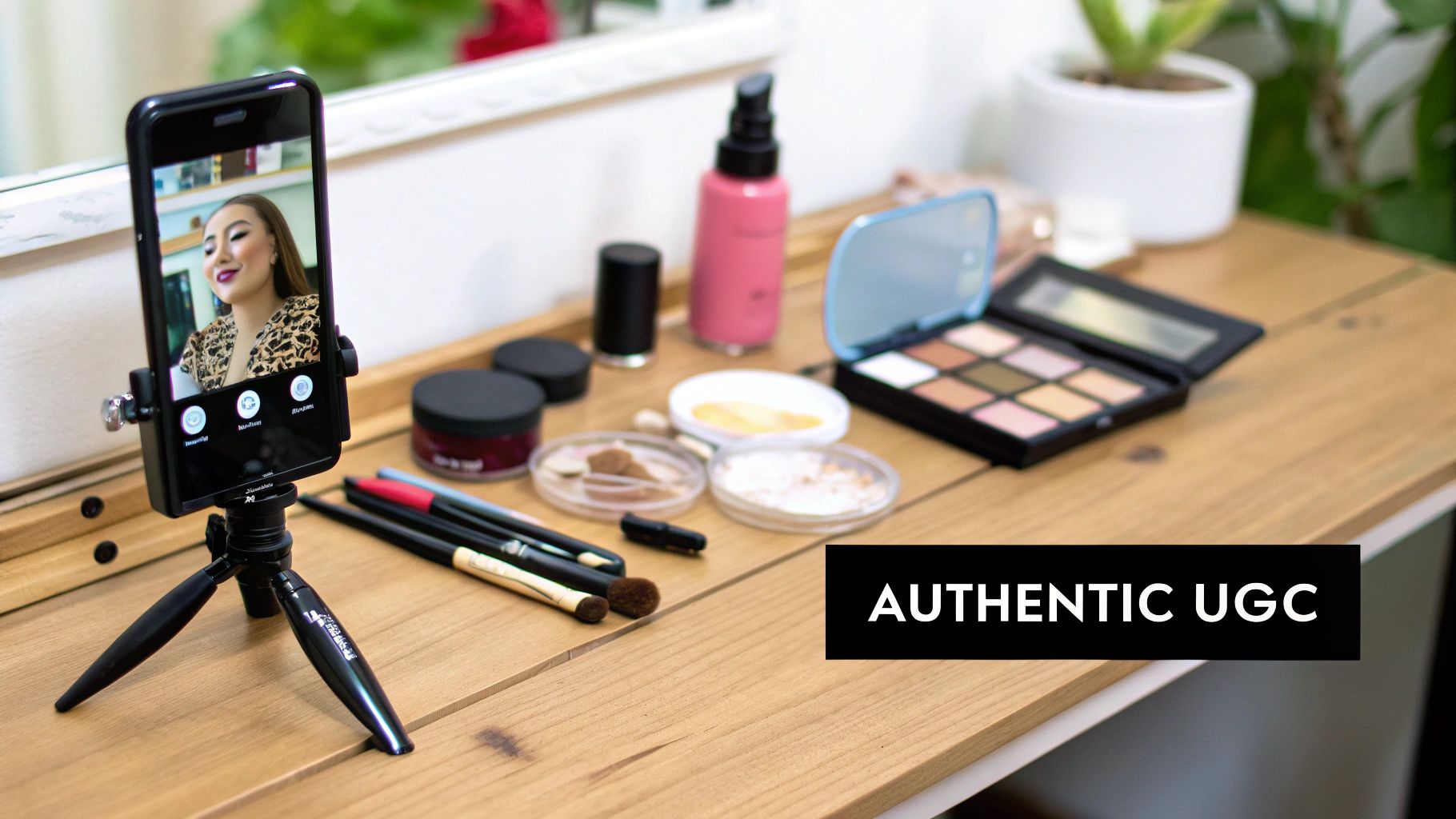
This approach makes their marketing feel less like an advertisement and more like a genuine recommendation from a friend. For their mobile app, this translates into tutorials and reviews that not only showcase products but also naturally integrate the app experience. Campaigns like their famous #GlossierGirl hashtag encouraged everyday users to post their own content, which the brand would then amplify, creating a powerful flywheel of authentic social proof. This strategy is especially potent for Gen Z, a demographic that values authenticity and peer reviews over polished corporate messaging.
How to Replicate This Strategy
To apply Glossier’s method for your app, focus on building a community, not just running ads. Start by identifying micro-influencers who genuinely align with your app's purpose and user base.
- Prioritize Audience Alignment: Look for creators whose followers match your ideal user persona. Engagement rate is more important than follower count.
- Seed Your Product (App): Provide early or exclusive access to your app's features. Encourage creators to explore it and share their honest, unfiltered experience.
- Launch a UGC Campaign: Create a branded hashtag and encourage users to share their experiences with your app. Feature the best submissions on your official channels to foster a sense of community. For an in-depth guide, you can learn more about the strategic value of user-generated content on adworkly.co.
- Track Performance: Implement unique promo codes or trackable download links for each creator to measure app installs and calculate your cost-per-acquisition (CPA) effectively. This data is crucial for optimizing future campaigns.
2. TikTok Trend Hijacking & Creator Fund Approach (Duolingo Model)
Duolingo mastered viral marketing by transforming its brand into a TikTok-native creator, a powerful influencer marketing campaign example for app developers. The strategy hinges on "trend hijacking," where the brand rapidly participates in emerging trends, sounds, and memes using its mascot, Duo the Owl. This approach ditches traditional ads for short-form, humorous, and highly shareable videos that feel organic to the platform, driving massive brand awareness and app downloads through entertainment rather than direct selling.

By personifying its brand through a mischievous mascot, Duolingo creates a consistent character that users can follow and engage with. This builds a loyal community that anticipates content, effectively turning the brand's own channel into an influential entity. The success of this model lies in its agility and deep understanding of platform culture. It proves that brands can achieve explosive organic reach and drive user acquisition by becoming active, entertaining participants in the online conversation rather than just advertisers.
How to Replicate This Strategy
To replicate Duolingo’s success, your app brand needs to act more like a creator than a corporation. This means prioritizing speed, authenticity, and entertainment value in your content.
- Monitor Trends Daily: Assign a dedicated person or team to monitor TikTok’s "For You" page, trending sounds, and hashtags. Speed is critical; you must act on a trend within 24-48 hours.
- Develop Content Pillars: Create a simple, repeatable format. This could involve a brand mascot, a recurring character, or a specific video style that allows for quick iteration on new trends.
- Embrace Humor and Relatability: Focus on content that entertains or resonates emotionally with your target audience. The goal is to make people forget they are watching a brand. For a deeper dive, explore how to build a comprehensive TikTok influencer marketing strategy on adworkly.co.
- Track Beyond Vanity Metrics: While views and likes are important, connect viral moments to tangible business goals. Monitor spikes in app store searches, brand mentions, and organic downloads following a successful video to measure the true ROI.
3. Community & Thought Leadership: Reddit AMAs, Podcasts & Industry Engagement
Combining Reddit AMAs ("Ask Me Anything"), branded podcasts, and industry thought leadership is a powerful strategy for building credibility and engaging niche audiences. This approach positions app founders and teams as accessible experts, driving organic discovery and fostering a loyal user base. Instead of traditional paid ads, brands like Stripe and HubSpot use these platforms to offer genuine value, answer tough questions, and build trust within specific communities.
This method shines for both B2B and B2C apps targeting discerning users who value expertise and authenticity. For instance, Stripe's co-founders engaged directly with developers and entrepreneurs in AMAs on r/startups, cementing their status as industry leaders. Similarly, HubSpot's podcasts provide actionable marketing advice, naturally positioning their software as an essential tool. This form of influencer marketing is less about direct promotion and more about earning user trust through demonstrated knowledge and community participation. The goal is to become an indispensable resource, making your app the logical choice.
How to Replicate This Strategy
To use thought leadership for your app, focus on providing value first and promoting second. Become an active, helpful member of the communities where your ideal users spend their time.
- Identify Niche Communities: Find relevant subreddits, professional forums, or podcast audiences that align with your app's purpose. Engage authentically by contributing to discussions long before promoting.
- Host a Reddit AMA: Partner with moderators of a target subreddit to schedule an AMA. Prepare for honest, in-depth questions about your app, industry, and journey. Authenticity is key to success on this platform.
- Launch a Branded Podcast: Create a podcast that addresses your users' biggest pain points or interests. Repurpose episodes into blog posts, social media clips, and newsletter content to maximize your reach.
- Track and Nurture Leads: Use UTM parameters in links shared during AMAs and custom promo codes mentioned in podcasts. This allows you to measure referral traffic, app sign-ups, and the overall ROI of your community-building efforts.
4. Fitness App Influencer Partnerships & Transformation Challenges
Fitness apps have mastered the art of driving both acquisition and long-term retention by partnering with trainers and wellness creators for structured transformation challenges. This strategy leverages long-term influencer seeding and time-bound campaigns, like 30 or 90-day challenges, to create powerful social proof through documented user results. Brands like Peloton, with its celebrity trainer partnerships, and Beachbody, with its famous transformation challenges, show how to build buzz and motivate downloads by showcasing real, attainable progress.
This approach works because it taps into a core user motivation: the desire for a structured path to a goal. By framing app usage within a challenge led by a trusted influencer, brands transform a solo activity into a community-driven event. The influencer provides credibility and inspiration, while the challenge creates urgency and a clear call to action. The resulting user-generated content, featuring before-and-after photos and testimonials, becomes an authentic and compelling advertisement for the app's effectiveness, making this one of the most powerful influencer marketing campaign examples for subscription-based apps.
How to Replicate This Strategy
To replicate this for your app, focus on creating a well-defined, time-bound experience that delivers tangible results for your users.
- Select Aligned Influencers: Partner with fitness and wellness creators who specialize in the type of activity your app offers. A yoga instructor for a meditation app or a marathon runner for a training app ensures authenticity.
- Create a Proprietary Challenge: Develop a branded challenge with a unique name, like the '30-Day Thrive Challenge'. Provide influencers with a clear structure, workout plans, and daily prompts to share with their audience.
- Build an In-App Community: Create a dedicated space within your app, such as a group or channel, where challenge participants can connect, share progress, and motivate one another. This boosts engagement and retention.
- Track and Incentivize: Use unique links or codes to track sign-ups from each influencer. Offer incentives for top-performing participants, such as premium access, merchandise, or a feature on your social channels, to encourage completion and sharing. Collect content rights upfront to repurpose the best UGC in future ads.
5. Gaming App Streamer Partnerships & Twitch/YouTube Seeding
Gaming apps have mastered the art of leveraging Twitch and YouTube streamers to build massive audiences and drive installs. This strategy involves partnering with streamers by providing early access, exclusive in-game content, or revenue-sharing models to encourage live gameplay demonstrations. The authentic, long-form content produced by streamers on platforms like Twitch and YouTube serves as a powerful, real-time tutorial and endorsement, converting engaged viewers into active players.
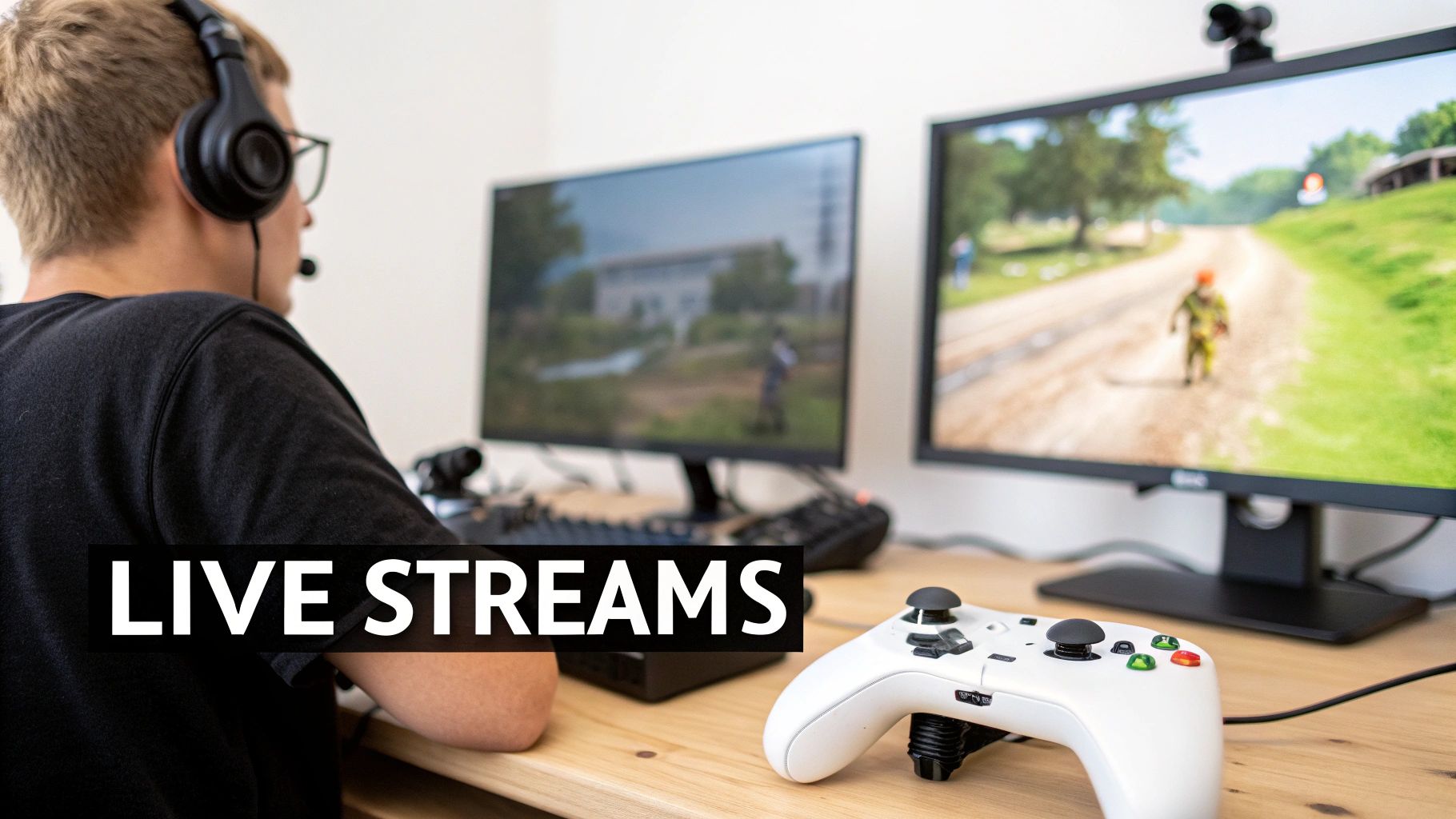
This method moves beyond a simple ad read, immersing the creator's audience directly into the game's world. Iconic mobile titles like Genshin Impact and RAID: Shadow Legends popularized this model by seeding their games with a wide range of streamers, from micro-influencers to mega-stars. These partnerships often involve affiliate programs where streamers earn a commission for each install driven through their unique link, creating a performance-based incentive. This is one of the most effective influencer marketing campaign examples for app developers aiming for both high-volume user acquisition and deep user engagement.
How to Replicate This Strategy
To replicate this for your app, focus on building mutually beneficial partnerships that provide genuine value to both streamers and their audiences. The goal is to facilitate authentic gameplay content that showcases your app's core features.
- Identify Relevant Streamers: Find creators on Twitch, YouTube, or even TikTok whose audience demographics and gaming preferences align with your app's target user. Engagement and community trust are more important than sheer subscriber numbers.
- Create Tiered Partnership Offers: Develop different partnership levels. Offer micro-influencers early access or in-app currency, while negotiating more structured, paid campaigns or revenue-sharing deals with larger creators.
- Provide a Creative Brief, Not a Script: Give streamers key talking points about your app's mechanics and unique selling propositions, but allow them the creative freedom to play and react genuinely. Authenticity is crucial for their audience to trust the recommendation.
- Implement Performance Tracking: Equip every streamer with a unique download link or promo code. This allows you to accurately measure installs, track cost-per-install (CPI), and identify your most effective partners for future collaborations.
6. Financial App Educational Series & Money Creator Partnerships
Finance apps like Acorns and Robinhood have excelled by partnering with trusted personal finance creators to produce educational content. This strategy positions the app as an authoritative resource, building credibility and attracting high-quality users who are genuinely interested in managing their money. Instead of simple product promotions, these partnerships focus on creating valuable, long-form content like YouTube series or in-depth blog posts that explain complex financial topics, naturally integrating the app as a practical tool to apply these lessons.
This educational approach is a powerful long-term play. It helps demystify topics like investing or budgeting, which builds immense trust with an audience that is often cautious about financial products. By co-creating content with established "money creators," brands like Wealthfront tap into a pre-built audience that values expertise and authenticity. The resulting videos and articles also generate significant SEO and discovery value, continuously attracting new, high-intent users long after the initial campaign launch. It’s a perfect example of an influencer marketing campaign that prioritizes value over a hard sell.
How to Replicate This Strategy
To adopt this educational model for your finance or productivity app, focus on providing tangible value and building trust through credible expertise.
- Identify Niche Experts: Partner with creators who are genuine authorities in your app's domain, whether it's personal finance, productivity, or wellness. Their credibility is your primary asset.
- Co-Create an Educational Series: Work with the creator to develop a content series that addresses your target audience's biggest pain points. Focus on teaching concepts first and showcasing your app as the solution second.
- Establish Editorial Independence: Grant creators the freedom to share their honest opinions. This authenticity is crucial for maintaining audience trust. Mandate clear disclosures of the partnership to comply with regulations and build transparency.
- Measure Beyond Installs: Track metrics that reflect genuine user engagement, such as time spent in the app after download, key feature adoption, and for finance apps, the rate of account funding. Use unique affiliate links to attribute sign-ups and actions back to specific creator campaigns.
7. Food & Lifestyle App Influencer Unboxing & Aesthetic Strategy
Food delivery and lifestyle apps have mastered the art of integrating their services into the aspirational daily routines of consumers. This is one of the most effective influencer marketing campaign examples because it uses visual storytelling to drive downloads. The strategy hinges on partnerships with food and lifestyle creators who produce aesthetic "unboxing" videos or "day in the life" content, seamlessly weaving the app into an appealing narrative.
Brands like HelloFresh and Instacart excel at this by collaborating with influencers to show the entire user journey, from browsing the app to enjoying the final meal. Campaigns like Instacart's #InstacartPartner showcase creators receiving their grocery deliveries and preparing beautiful meals, making the service feel like an essential tool for a well-organized, healthy lifestyle. This approach moves beyond a simple app review, demonstrating tangible value and tapping into viewers' desires for convenience and aesthetic living. The content feels less like a direct ad and more like a helpful life hack from a trusted source.
How to Replicate This Strategy
To replicate this for your app, focus on showing how your service fits into and elevates a user's daily life. The goal is to make your app appear indispensable through relatable, visually pleasing content.
- Identify Aesthetically Aligned Creators: Find influencers whose existing content style and audience match your brand's look and feel. Their personal brand should organically complement your app's value proposition.
- Provide a Creative Framework: Give influencers clear campaign goals and key messaging but allow them creative freedom. Suggest themes like "easy weeknight meals" or "hosting a dinner party" where your app plays a central role.
- Incentivize High-Impact Content: Secure the rights to repurpose top-performing influencer content for your own paid ad campaigns. This extends the value of the collaboration and leverages proven creative for broader user acquisition efforts.
- Implement Affiliate Tracking: Use unique discount codes or trackable links for each influencer. This allows you to measure direct performance, including app installs and first-time orders, to calculate a precise return on investment.
8. Mental Health & Wellness App Therapist/Expert Testimonial Campaigns
For mental health and wellness apps, establishing trust is the most critical marketing objective. Brands like Calm and Headspace achieve this by collaborating with licensed therapists, psychologists, and wellness experts. This strategy moves beyond traditional influencer marketing by leveraging professional authority to build credibility and provide users with a sense of security and validation. Instead of simply promoting an app, these experts offer genuine, evidence-based insights, making the partnership feel like an educational resource, not a paid ad.
This approach is powerful because it directly addresses the user's core need for reliable, professional guidance. Headspace features content from neuroscientists, while Talkspace highlights its network of licensed therapists in testimonials. These expert endorsements are featured across app store listings, advertisements, and in-app content, creating a consistent message of credibility. This type of influencer marketing campaign example is essential for apps in sensitive verticals where user trust is paramount and professional validation can be the deciding factor for a download.
How to Replicate This Strategy
To build a trust-based campaign for your app, focus on authentic partnerships with qualified professionals who can vouch for your product’s integrity and effectiveness.
- Identify and Vet Credible Experts: Search for licensed professionals like therapists, doctors, or certified coaches who have an existing, engaged social media presence. Prioritize their credentials and genuine alignment with your app's mission over follower count.
- Co-Create Educational Content: Work with experts to produce valuable content such as articles, guided meditations, or expert-led workshops within your app. This provides real value to users while showcasing the expert's endorsement.
- Showcase Testimonials and Credentials: Use expert testimonials and highlight their qualifications prominently on your website, app store pages, and in your ad creatives. This social proof is a powerful conversion tool.
- Develop Compliant Messaging: Health and wellness claims are highly regulated. Collaborate with your experts and legal counsel to create a messaging framework that is both compelling and compliant, avoiding unsupported health claims.
9. Performance Marketing with Affiliate Influencer Networks & Programmatic UGC
Moving beyond brand awareness, this strategy treats influencer marketing as a direct acquisition channel. This approach uses affiliate networks and programmatic user-generated content (UGC) platforms to scale creator partnerships based on measurable performance, such as cost-per-install (CPI) or cost-per-action (CPA). Instead of flat fees, influencers earn commissions for driving specific outcomes, directly aligning their incentives with your app's growth objectives. Platforms like CreatorIQ, AspireIQ, and UGC-focused services like Billo and Insense facilitate these performance-based relationships at scale.
This model transforms influencer collaborations from a creative expense into a predictable, performance-driven marketing investment. For mobile apps, this means paying creators for tangible results like app downloads, sign-ups, or in-app purchases. For instance, an Adworkly campaign on TikTok might involve hundreds of creators using unique affiliate links, with their compensation tied directly to the number of installs they generate. This data-driven method allows for precise ROI tracking and optimization, making it one of the most effective influencer marketing campaign examples for brands focused on scalable user acquisition.
How to Replicate This Strategy
To implement a performance-based influencer program, you need the right technology and a clear framework. The goal is to build a scalable engine for predictable growth.
- Define Clear Performance Metrics: Establish your primary KPI upfront. This could be app installs, trial sign-ups, or first-time deposits. Your commission structure should be directly tied to this metric.
- Use an Affiliate Management Platform: Partner with a network or use software to generate unique tracking links, manage payouts, and provide creators with performance dashboards. This transparency is key to motivating creators.
- Create Content Templates & Briefs: Guide creators on messaging and calls-to-action while still allowing for authenticity. Provide them with key talking points about your app's value proposition. For a deeper dive into structuring these campaigns, you can learn more about performance marketing for mobile apps on adworkly.co.
- Track Post-Install Events: Go beyond just installs. Monitor metrics like user retention and lifetime value (LTV) for each creator to identify partners who drive high-quality, engaged users, not just downloads. This helps you identify and build long-term relationships with your top performers.
9 Influencer Marketing Campaigns Compared
Building Your Own High-Performance Influencer Program
Throughout this deep dive into influencer marketing campaign examples, a clear pattern has emerged. Success is rarely a single viral moment; it is the result of a deliberate, systematic approach to creator partnerships. We have moved beyond generic endorsements and into a new era of strategic, performance-driven influencer marketing that delivers measurable results for app user acquisition and retention.
The campaigns we analyzed, from Glossier’s community-centric UGC machine to Duolingo’s mastery of TikTok trends, all share foundational principles. They begin with crystal-clear objectives, build upon authentic creator collaborations, and rely on rigorous performance tracking to justify their investment and inform future strategy. This is the new blueprint for growth.
Synthesizing Key Learnings
Reflecting on the diverse examples covered, several core themes stand out as critical for building your own program. These are the strategic pillars that separate high-impact campaigns from forgettable one-off posts.
- Authenticity is Non-Negotiable: The most effective partnerships feel genuine because they are. Whether it is a fitness influencer sharing a real transformation or a finance expert breaking down complex topics, the creator must have a credible connection to your app’s mission. Audiences can spot a forced endorsement instantly.
- Platform Dictates Strategy: A successful TikTok campaign looks vastly different from a compelling Reddit AMA or a high-production YouTube series. Your creative approach, content format, and even your choice of influencer must be native to the platform where your target audience spends their time.
- Micro-Influencers Drive Engagement: While macro-influencers offer reach, micro and nano-influencers often deliver superior engagement rates and perceived authenticity. Their smaller, niche communities are highly trusting, making them powerful partners for driving consideration and conversions, especially for specialized apps.
- Measurement is Your North Star: The most sophisticated brands treat influencer marketing like any other performance channel. They track metrics far beyond likes and comments, focusing on installs, CPA, retention rates, and LTV. This data-driven approach is essential for optimizing spend and proving ROI.
Your Actionable Roadmap to Influencer Success
Reading about these influencer marketing campaign examples is the first step. Now, it is time to translate these insights into a concrete action plan for your app. The journey from inspiration to execution requires a structured approach.
- Define Your Core Objective: What is the single most important goal for your campaign? Is it driving a high volume of app installs, increasing user retention for a specific feature, or building brand credibility within a new market? Your objective will guide every subsequent decision.
- Identify Your Ideal Creator Persona: Move beyond simple demographics. Think about the values, interests, and communication style of your target user. The right influencer will embody these traits and speak the same language as your community. This is the key to an authentic partnership.
- Start Small and Test: You do not need a massive budget to begin. Select one or two strategies from the examples above that align with your app. Launch a small-scale pilot campaign with a handful of micro-influencers to test your messaging, creative, and tracking before committing to a larger investment.
- Build a Scalable System: Once you find what works, focus on building repeatable processes. Create clear creative briefs, establish a transparent contracting and payment workflow, and implement a robust tracking system using UTMs, affiliate links, or dedicated platforms. This operational foundation is what allows you to scale your program efficiently and predictably.
By adopting this strategic mindset, you transform influencer marketing from a speculative tactic into a reliable growth engine. The power of this channel lies in its unique ability to combine the precision of performance marketing with the persuasive power of human storytelling. Mastering it gives your app a durable competitive advantage, building a brand that users not only download but also trust, advocate for, and love.
Ready to turn these examples into your own success story? Adworkly specializes in building and scaling high-performance influencer marketing programs for app brands. We combine AI-driven strategy with expert execution to turn creator-led campaigns into a predictable and profitable channel for user acquisition. Learn how Adworkly can build your growth engine.