Top Influencer Marketing Platforms for App Growth 2025
Discover the best influencer marketing platforms to boost your app's growth in 2025. Choose the right influencer marketing platforms for success.
Influencer marketing is a key strategy for app growth, but managing it manually is inefficient. Finding creators, negotiating contracts, tracking campaign performance, and measuring ROI create operational hurdles. The right software automates these tasks, turning a complex process into a manageable workflow. Choosing the correct tool from the many available influencer marketing platforms is critical for success. Each platform offers unique strengths. Some excel at creator discovery in niche markets, while others provide robust analytics for performance-driven app marketing teams.
This guide provides an analysis of the 12 best influencer marketing platforms for your app growth needs. We examine the specific features, pricing models, and ideal use cases for tools like CreatorIQ, Aspire, and Upfluence. For each option, you will find a detailed profile, screenshots, and direct links to help you make an informed decision. Our goal is to give you the practical information needed to select the platform that aligns with your specific marketing objectives, team size, and budget. This resource will help you find the best solution to streamline your creator partnerships and accelerate user acquisition.
1. Adworkly
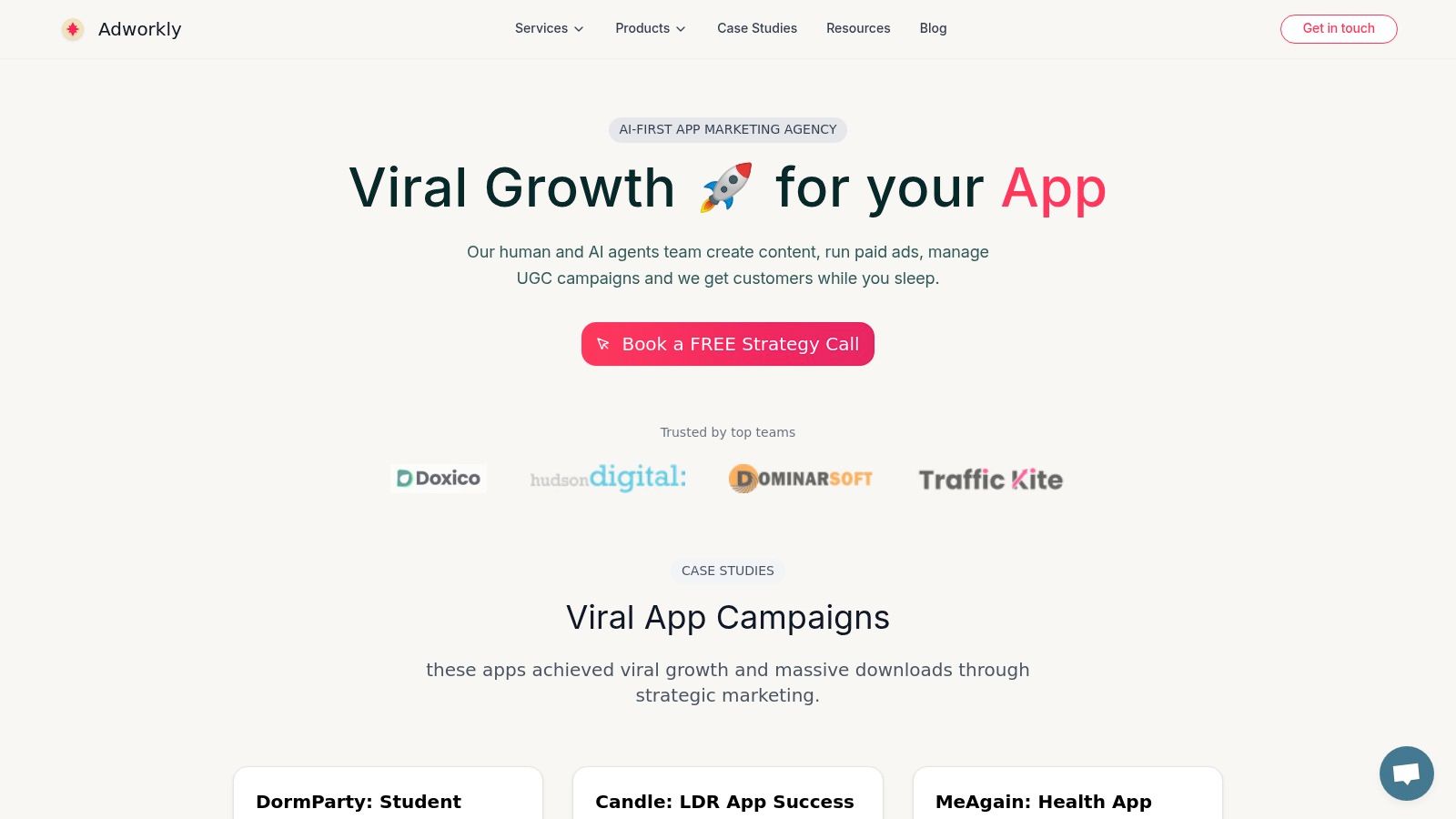
Adworkly operates as a hybrid consultancy and agency, pairing human strategic oversight with AI technology. This combination is engineered to drive consumer app growth, making it a standout choice for mobile-first businesses seeking comprehensive marketing solutions. The platform moves beyond basic influencer discovery. It integrates user-generated content (UGC) campaigns with core app growth services like App Store Optimization (ASO) and performance marketing.
Why Adworkly Stands Out
Adworkly’s strength is in its holistic approach. The agency builds campaigns that directly support ASO and conversion rate optimization goals instead of treating influencer marketing as a silo. Its AI-driven tools provide deep analytics, allowing your team to make informed decisions and refine campaign performance based on concrete data. This data-first methodology has led to documented viral campaigns with millions of views and significant revenue increases for its clients.
Key Details and Considerations
- Best For: App founders, mobile game studios, and digital marketers focused on increasing app visibility and user acquisition.
- Unique Offering: The fusion of expert-led strategy with AI automation ensures campaigns are both creative and analytically sound. You can explore their approach with these social media marketing strategies from Adworkly.
- Pricing: Pricing information is not public. You must contact their team directly to receive a custom quote based on your specific needs and budget.
- Access: Adworkly offers a free 30-minute consultation to develop a tailored strategy, providing direct access to their experts without an initial commitment.
This integrated service model makes Adworkly one of the most effective influencer marketing platforms for businesses that require more than creator partnerships.
2. CreatorIQ
CreatorIQ is an enterprise-level platform designed for large organizations managing complex influencer marketing programs at scale. It offers a comprehensive, end-to-end solution, covering creator discovery, campaign workflows, performance measurement, and compliance. The platform's strength is its robust data infrastructure and governance controls, which are critical for brands that prioritize security and brand safety.
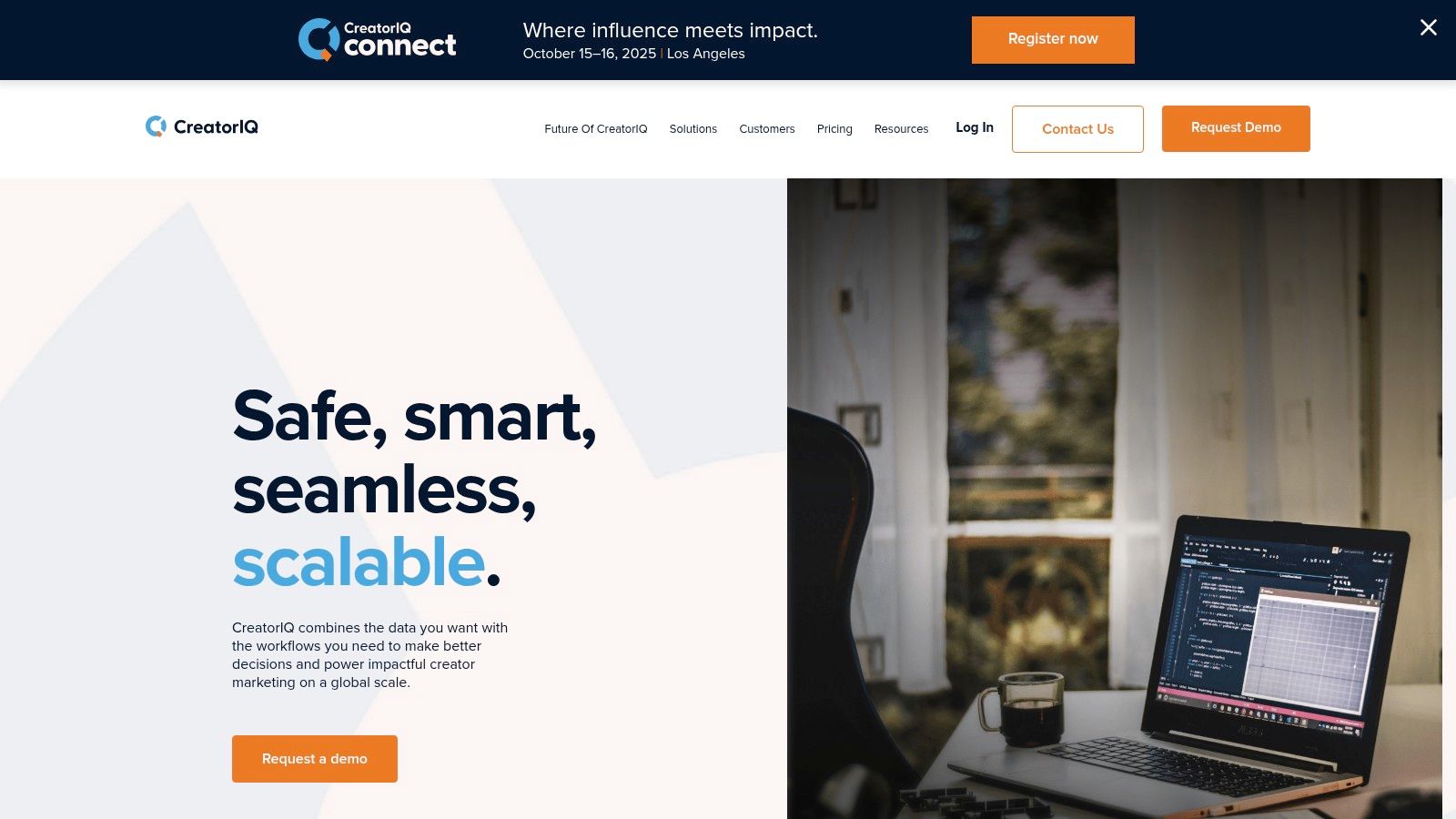
The platform provides deep competitive benchmarking and advanced reporting. This allows marketing teams to analyze their share of voice and campaign ROI against industry peers. For app marketing, this means you can track how your creator campaigns perform relative to competitors, identify high-performing talent, and manage creator relationships through a centralized system.
Platform Breakdown
- Pros: Highly scalable for global campaigns, trusted by major brands, and provides strong analytics.
- Cons: Pricing is not public and is likely too expensive for small to mid-sized teams.
- Website: https://www.creatoriq.com/
3. Aspire
Aspire offers a comprehensive influencer marketing platform that integrates a creator marketplace with end-to-end campaign management. The platform is designed for brands, particularly in e-commerce, that want to automate workflows for influencer discovery, outreach, product seeding, and payment processing. The platform supports various relationship types, including affiliates, ambassadors, and user-generated content creators, making it highly versatile for scaling marketing efforts.
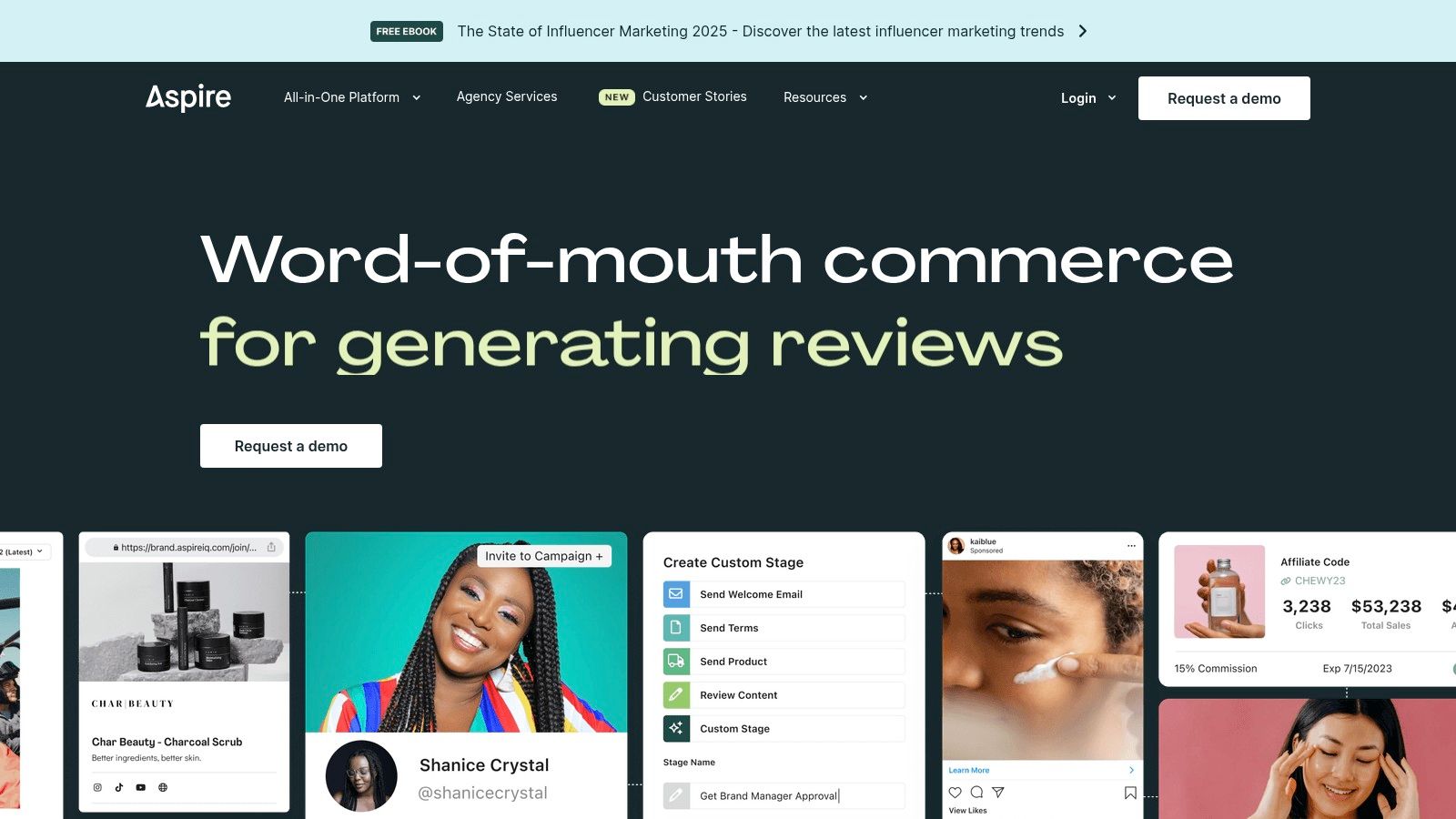
Aspire's strength is its ability to manage the entire creator relationship lifecycle within a single system. For app marketers, this means you can build long-term ambassador programs, automate UGC collection for ad creatives, and track the direct sales impact of your campaigns. The optional managed services also provide a valuable resource for teams that need extra strategic support or execution power. This makes Aspire one of the more flexible influencer marketing platforms available.
Platform Breakdown
- Pros: Combines a marketplace with a full SaaS platform, has a strong e-commerce focus, and saves time.
- Cons: Pricing is not publicly available, and a demo is required to access the platform.
- Website: https://www.aspire.io/
4. impact.com/creator
impact.com/creator is a performance-focused platform integrated within the larger impact.com partnership ecosystem. The platform unifies influencer marketing with other channels like affiliates and brand ambassadors, allowing you to manage all partnerships in one place. Its core strength is tying creator activity directly to business outcomes like sales and conversions, making it ideal for brands prioritizing measurable ROI.
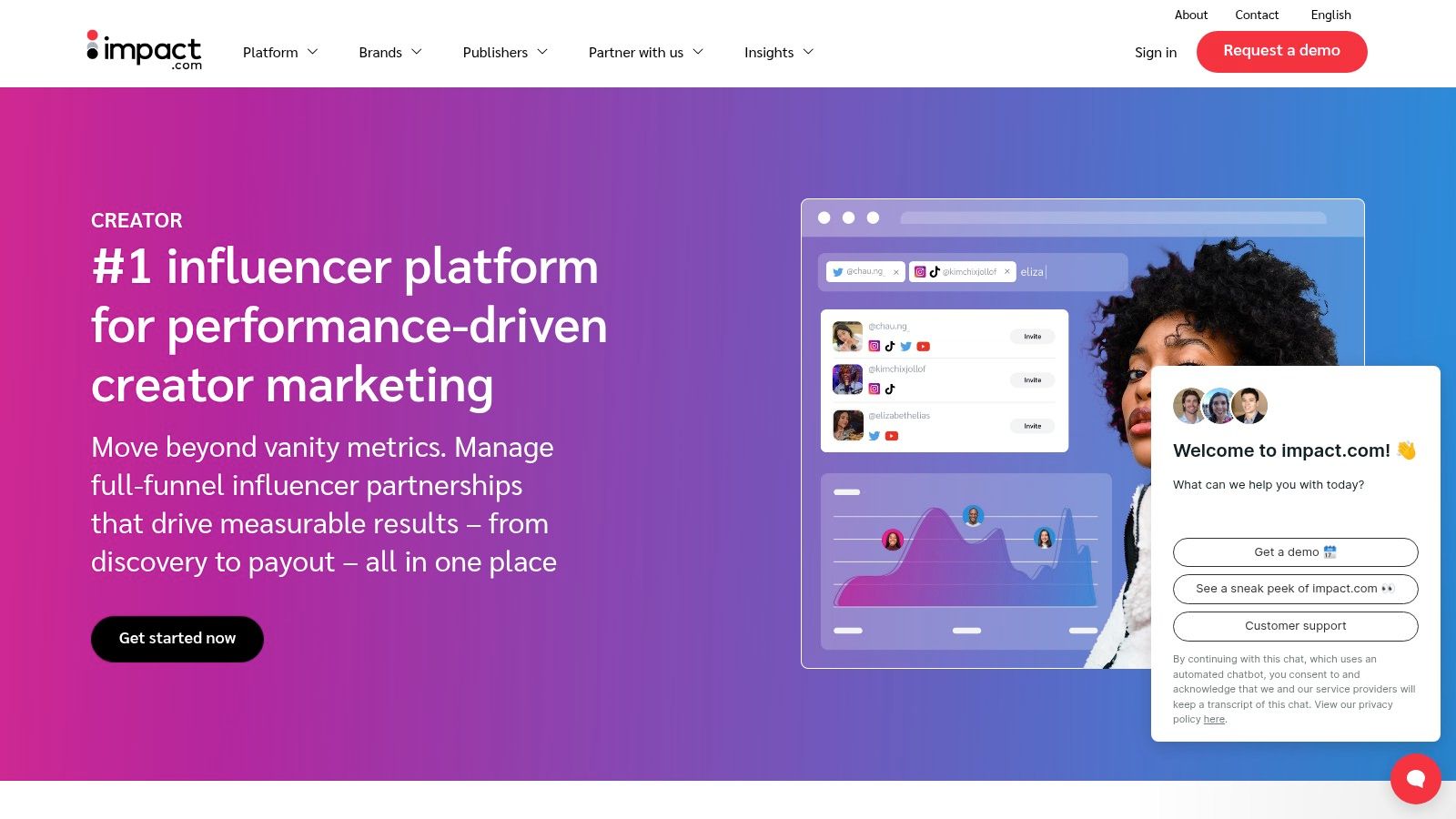
The platform shifts influencer marketing from a pure awareness play to a performance channel. For app marketing, this means you can track installs or in-app purchases directly from influencer content and compensate creators based on results. This approach helps optimize your budget by rewarding high-performing partners and consolidating payments across all your partnership programs.
Platform Breakdown
- Pros: Excellent for sales-oriented tracking, consolidates multiple partnership channels, and offers fast, flexible payouts.
- Cons: Pricing is not public, and its best value is realized when used with the full impact.com platform.
- Website: https://impact.com/creator/
5. Modash
Modash is a user-friendly influencer marketing platform built for SMBs and mid-market brands seeking robust discovery and campaign monitoring tools. The platform provides access to a database of over 250 million creator profiles across Instagram, TikTok, and YouTube, making it one of the most comprehensive discovery engines available. The platform is effective for e-commerce and app marketing teams that need reliable data without enterprise-level complexity or cost.
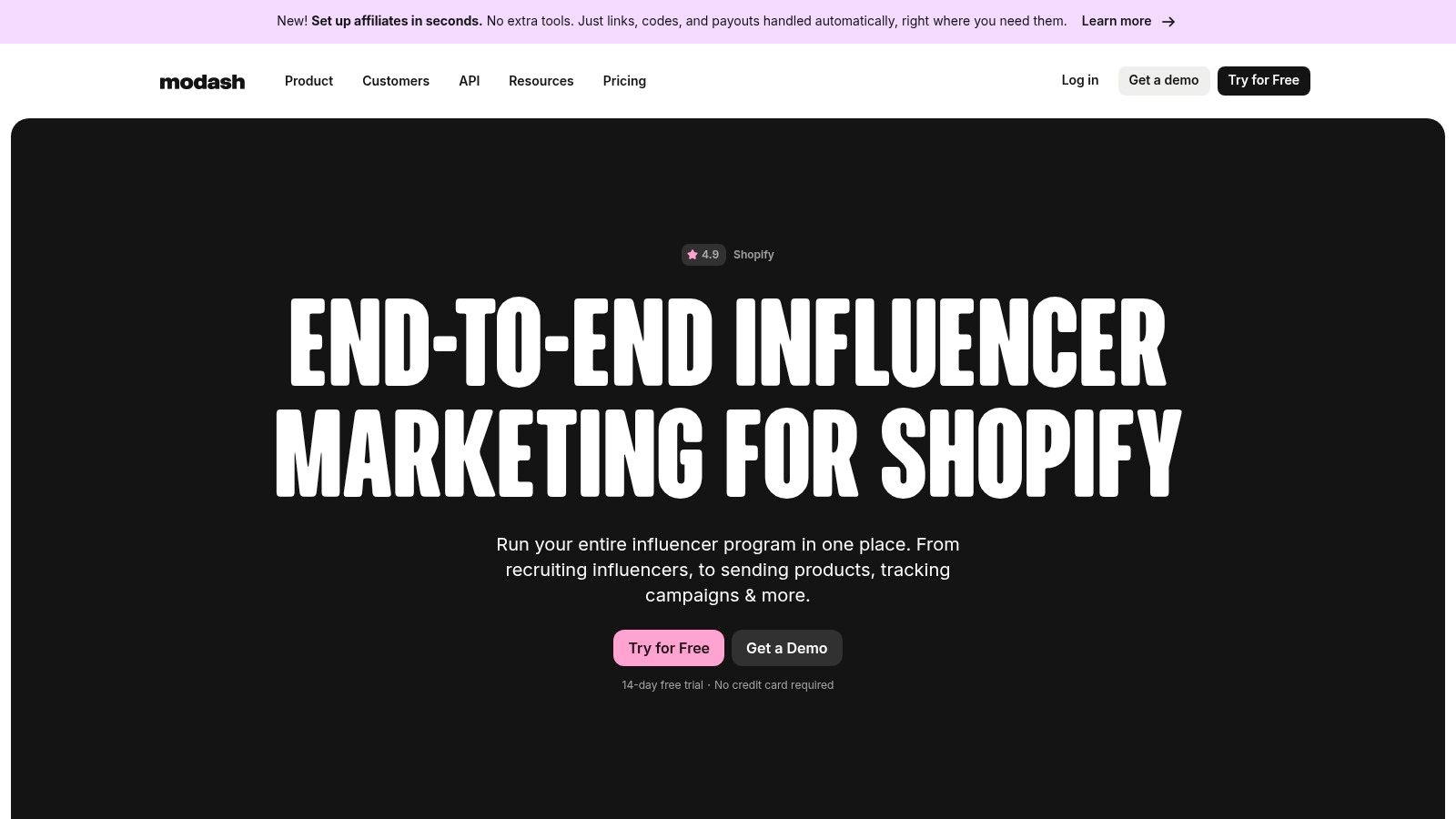
Its strength is its transparency and accessibility, offering public pricing and a free trial, which is uncommon among influencer marketing platforms. For app marketers, the Shopify integration and campaign tracking features allow you to monitor performance directly. You can link creator content to specific outcomes like downloads or in-app purchases. The platform also includes tools like disclosure alerts to ensure your campaigns meet FTC compliance requirements.
Platform Breakdown
- Pros: Clear and transparent pricing, strong fit for SMB usability, and fast setup with free trial options.
- Cons: The API is priced separately and is expensive for small users. Usage limits apply by pricing tier.
- Website: https://www.modash.io/
6. Upfluence
Upfluence is an influencer marketing platform built with ecommerce and affiliate marketing at its core. It provides deep integrations with major ecommerce systems like Shopify, WooCommerce, and Amazon. This makes it a top choice for brands focused on direct sales and conversions. The platform simplifies complex workflows, from creator discovery and outreach to product seeding and payment processing, all within a unified system.
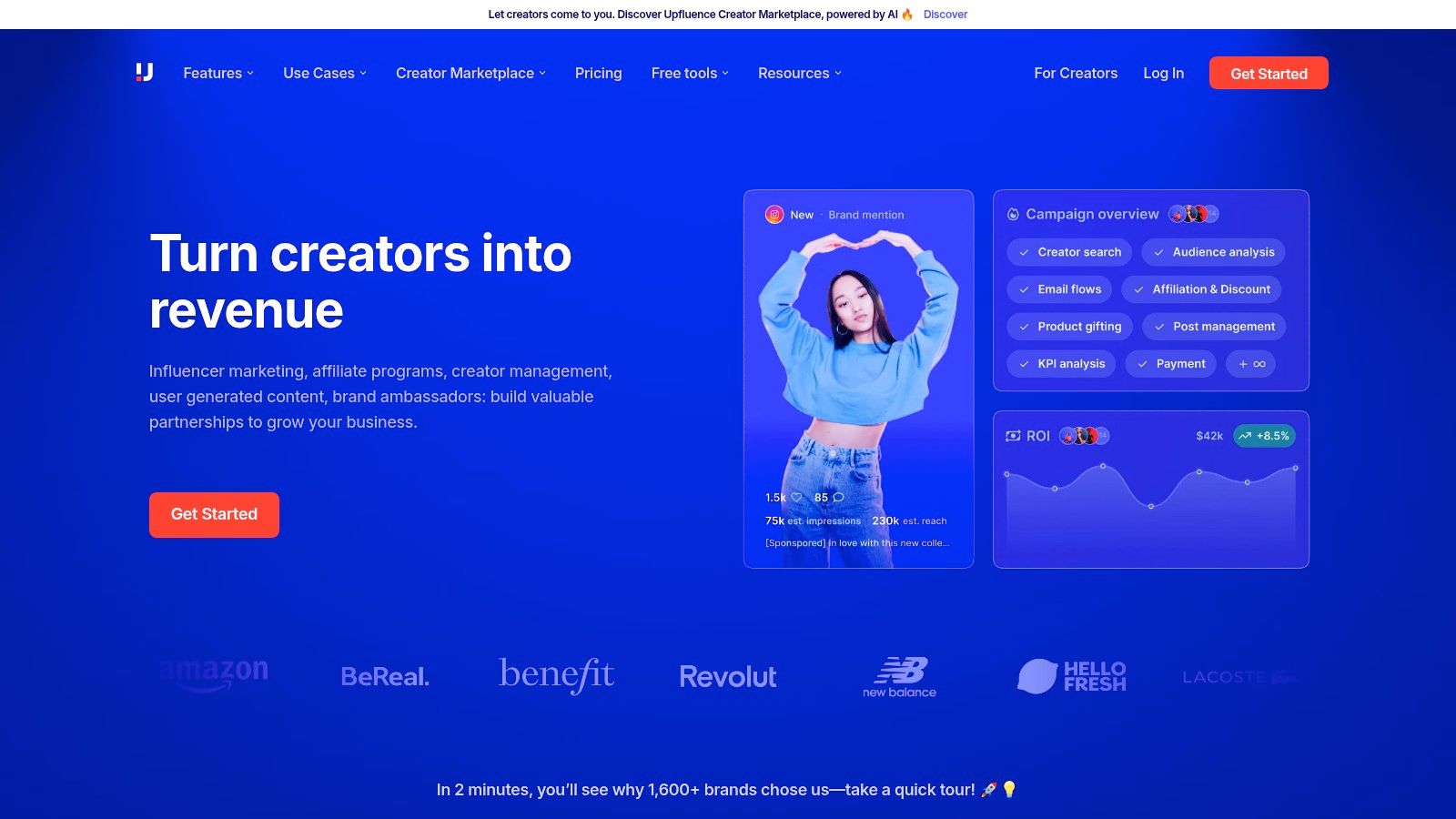
Its strength is connecting creator collaborations directly to sales outcomes. For app marketers or brands selling physical products, you can generate unique promo codes, manage gifting logistics, and track affiliate sales seamlessly. This focus on performance and attribution helps teams prove the ROI of their influencer programs. You can link campaign activities to revenue and traffic, such as increasing traffic to an Amazon product listing.
Platform Breakdown
- Pros: Strong ecommerce and affiliate program features, streamlined gifting and payment workflows, and excellent attribution tools.
- Cons: Pricing is not transparent, and the onboarding process is sales-led, which is a barrier for smaller teams.
- Website: https://www.upfluence.com/
7. Traackr
Traackr is an enterprise-grade influencer marketing platform known for its data-driven insights and strong governance capabilities. It is designed for global brands, particularly in regulated industries like beauty and fashion, that require sophisticated tools for creator discovery, campaign management, and performance measurement. The platform provides a system of record for influencer activities, ensuring brand safety and compliance across multiple teams and markets.
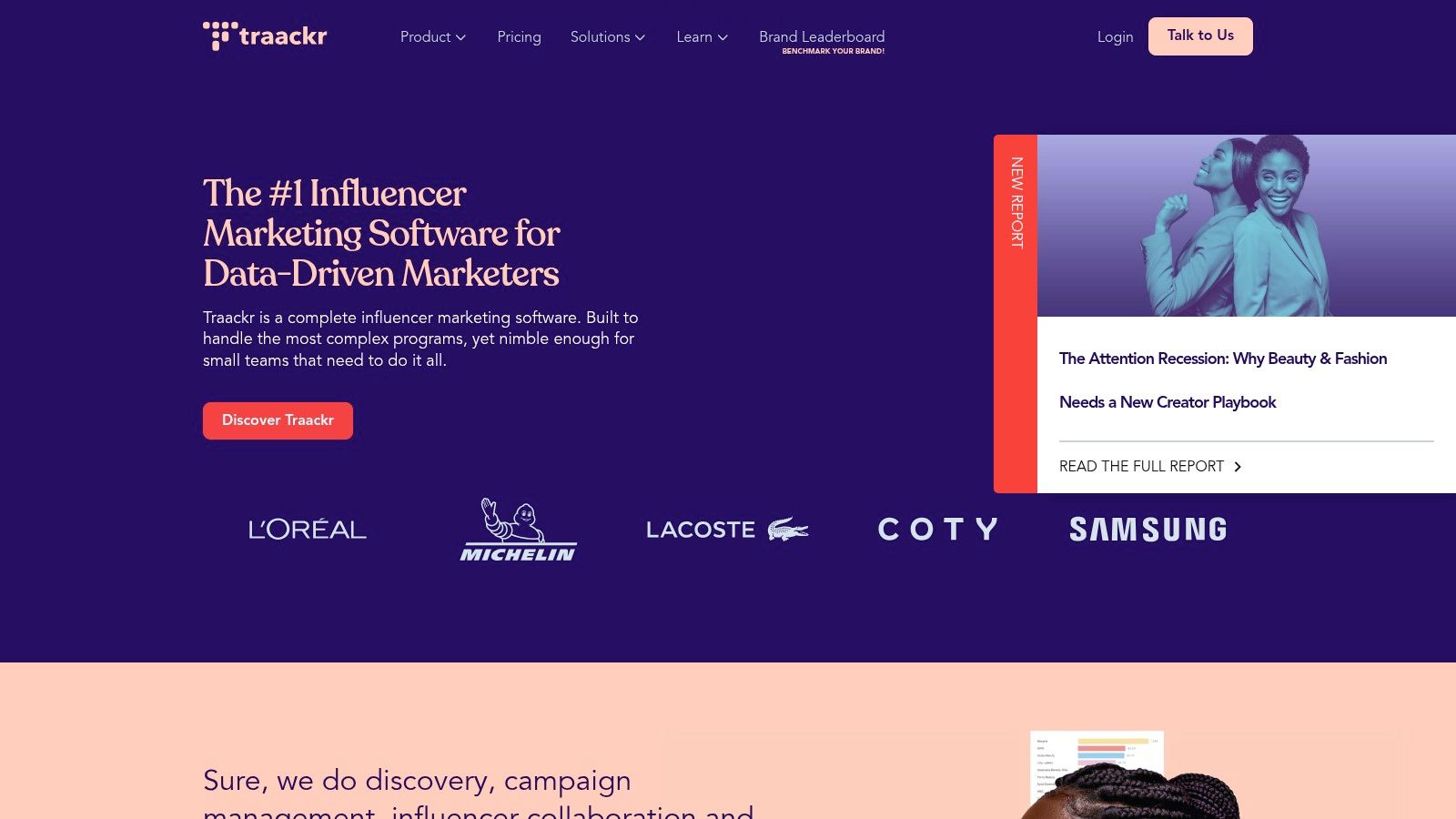
Its key differentiator is its benchmarking feature, which allows you to measure your brand’s performance against competitors. For app marketers, this means you can track share of voice and engagement metrics within your specific niche. Traackr’s standardized measurement system helps prove the value of your influencer programs with clear, reliable data. This makes it one of the top influencer marketing platforms for data-centric organizations.
Platform Breakdown
- Pros: Robust analytics and benchmarking, transparent starting prices, and designed for complex organizations.
- Cons: Higher entry cost with annual commitment and includes minimum user requirements.
- Website: https://www.traackr.com/
8. Sprout Social Influencer Marketing
Sprout Social Influencer Marketing, formerly known as Tagger, integrates an AI-driven platform into Sprout Social's broader social media management suite. This unification allows you to manage both your owned social channels and influencer marketing campaigns from a single dashboard. Its core strength is connecting every aspect of influencer collaboration, from discovery and brand safety vetting to approvals and performance analytics, within one ecosystem.
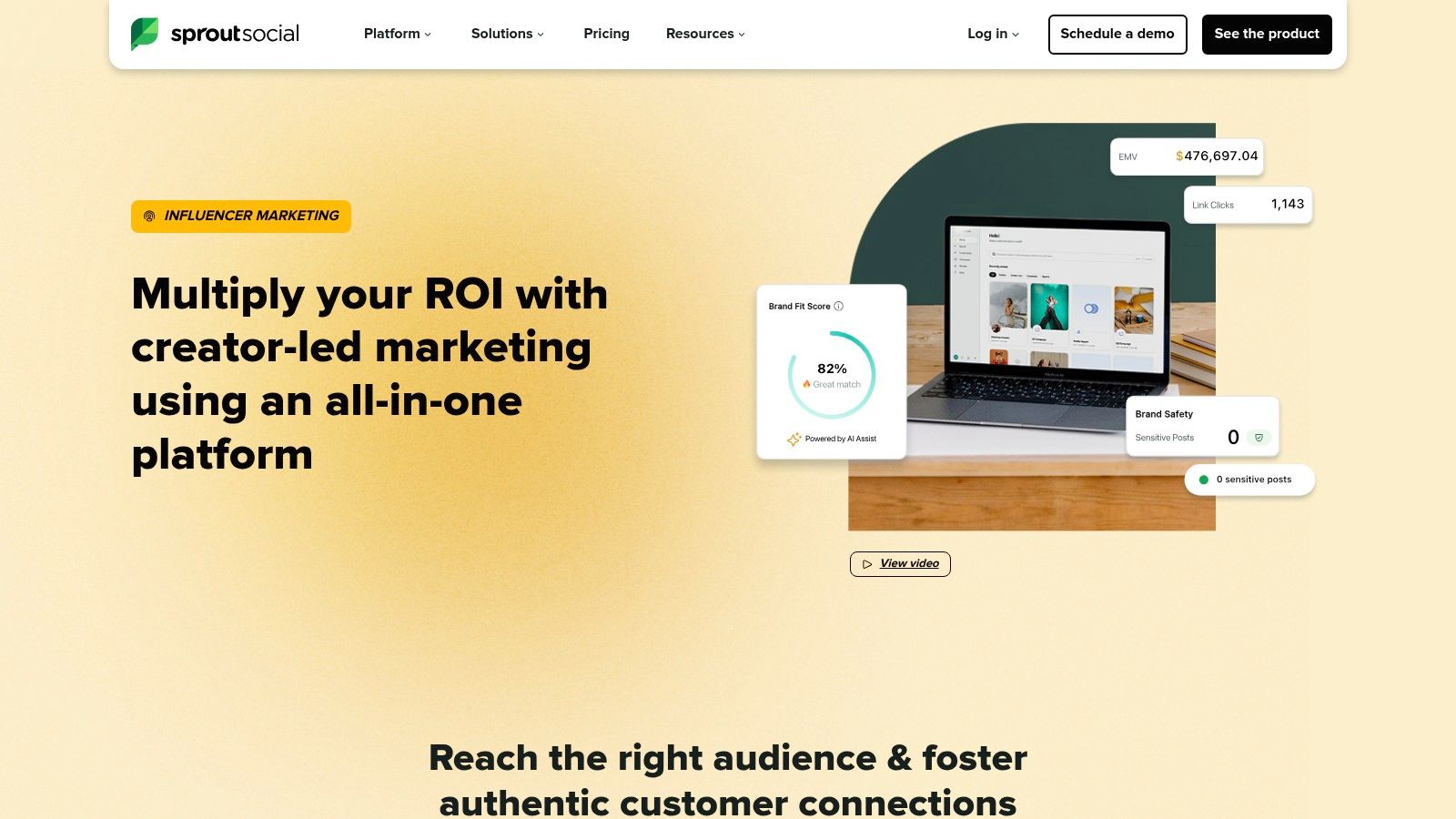
For app marketing teams, this means you can seamlessly promote high-performing creator content through Partnership Ads permissions directly within the platform. The platform uses AI for topic-led influencer searches and brand-fit scoring, which helps identify relevant partners more efficiently. The all-in-one approach simplifies workflows and provides a holistic view of your social and influencer ROI. This is a key advantage for brands looking to consolidate their marketing stack. You can learn more about its influencer marketing capabilities and how it fits into a larger strategy.
Platform Breakdown
- Pros: Backed by a leading social media management platform, unifies owned and influencer workflows, and modern AI tools enhance discovery.
- Cons: Pricing is not publicly available, and the full suite may present a learning curve for new users.
- Website: https://sproutsocial.com/influencer-marketing/
9. HypeAuditor
HypeAuditor specializes in advanced analytics and fraud detection, making it an essential tool for brands focused on creator authenticity and audience quality. It provides deep insights into an influencer's audience demographics, engagement authenticity, and follower growth patterns. This helps you identify and avoid creators with fake followers or inflated metrics. This focus on data integrity ensures your marketing budget is spent effectively.
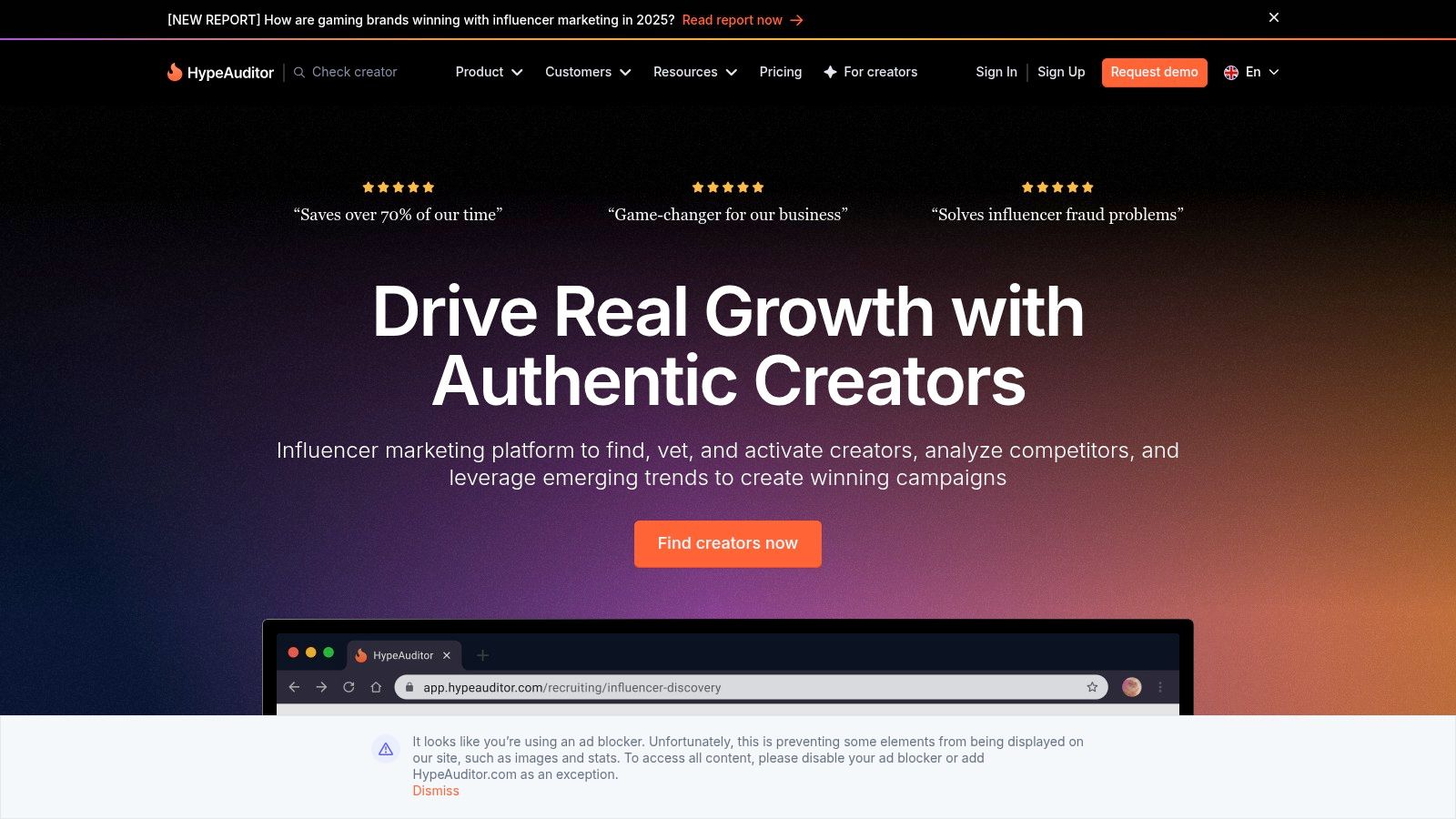
While its core strength is vetting, HypeAuditor also offers campaign management and media planning tools. For app marketers, this means you can find credible influencers whose audience aligns with your target users. You can also manage the subsequent campaign from a single interface. The platform serves as a standalone solution for vetting and a complementary tool for larger influencer marketing platforms.
Platform Breakdown
- Pros: Industry-recognized fraud detection, offers a quick pilot option, and is widely trusted for vetting.
- Cons: Pricing is not public, and it may require pairing with a separate CRM for full-scale operations.
- Website: https://hypeauditor.com/
10. Heepsy
Heepsy is a user-friendly, self-serve influencer discovery platform designed for small teams and those new to influencer marketing. It simplifies the search process with straightforward filters for niche, location, engagement rate, and audience authenticity. The platform's main appeal is its accessibility. It provides an easy entry point for brands to find relevant creators without the complexity of enterprise-level systems.
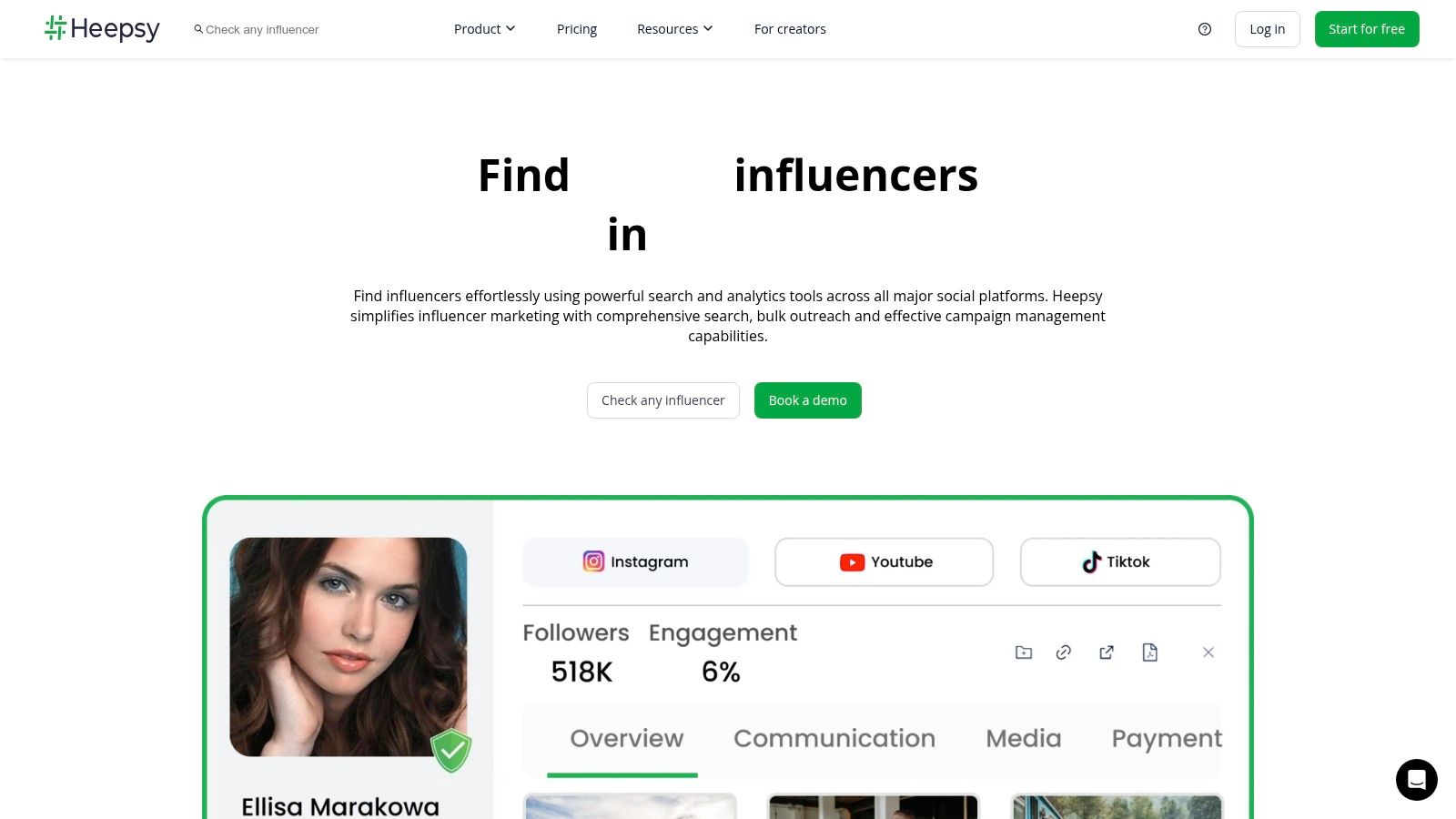
The platform stands out by offering valuable free tools, like influencer rate calculators for Instagram, TikTok, and YouTube, which help you estimate campaign costs early on. For app marketers, Heepsy’s authenticity screening is useful for identifying creators with genuine followings. This ensures your marketing budget is spent on reaching real, engaged users. It's a practical starting point among the many influencer marketing platforms available.
Platform Breakdown
- Pros: Easy onboarding process, a generous free search limit, and useful free tools for planning.
- Cons: Limited campaign management and reporting features, and detailed pricing is not prominent.
- Website: https://www.heepsy.com/
11. Shopify Collabs
Shopify Collabs is a native Shopify app designed for direct-to-consumer brands to manage influencer partnerships directly within their e-commerce ecosystem. It simplifies the process of recruiting creators, sending gifts, generating affiliate links, and tracking sales commissions. The platform is ideal for Shopify merchants who want a low-lift, integrated solution for their influencer marketing without leaving their primary sales dashboard.
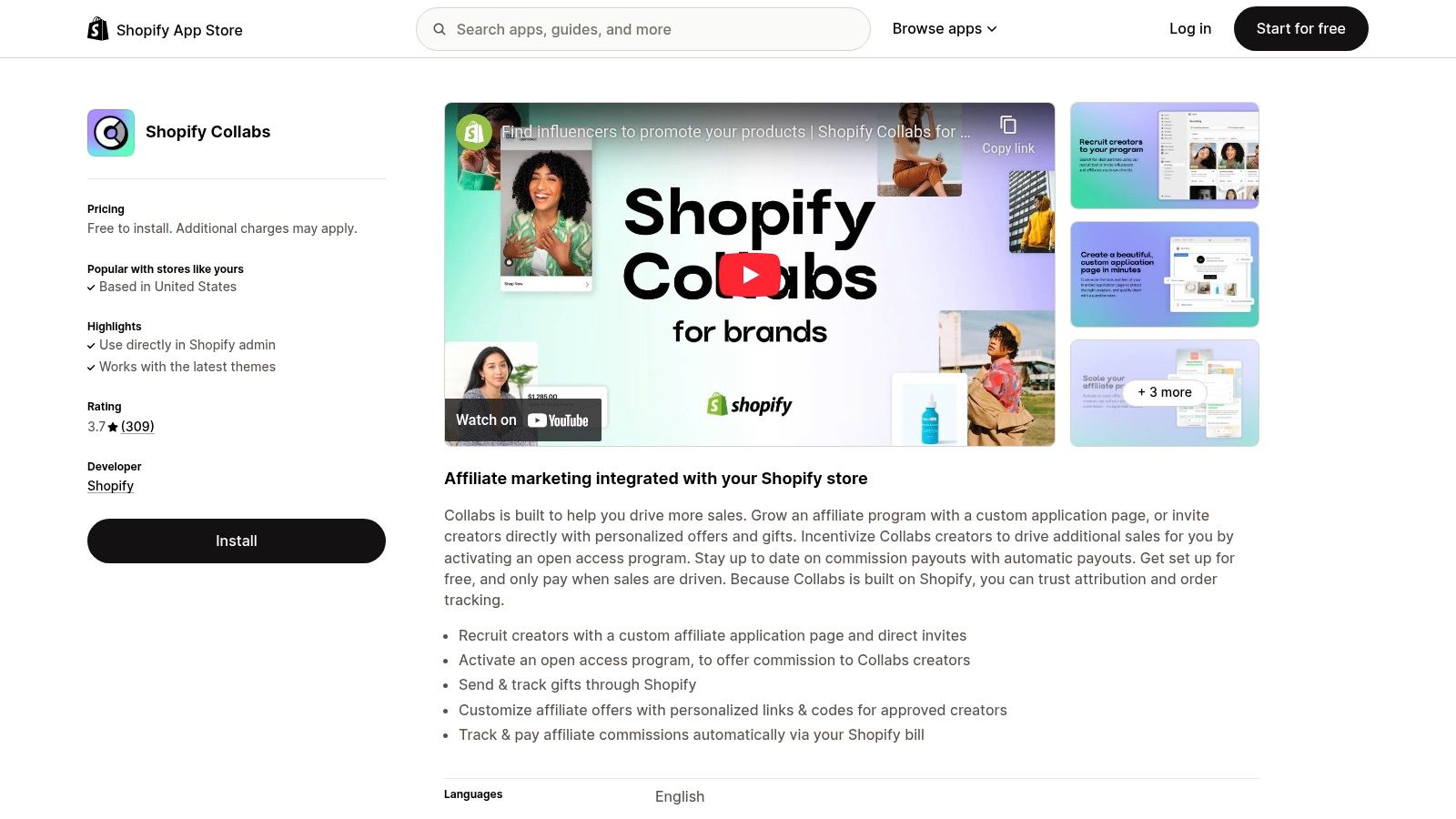
Its main advantage is the seamless connection with Shopify's core functions, from checkout to billing. You can create custom application pages, invite creators directly, and manage product gifting through your existing store inventory. For app marketing, if your app supports a Shopify-based product, this platform offers a direct line to creators who are already engaged with the e-commerce world. This makes it a targeted tool for driving app-related sales or sign-ups.
Platform Breakdown
- Pros: Free to install with pay-for-performance costs, low operational lift for Shopify-native brands, and smooth integration within the Shopify ecosystem.
- Cons: Creator discovery is more limited compared to larger influencer databases and it is best suited specifically for Shopify stores.
- Website: https://apps.shopify.com/collabs
12. Afluencer
Afluencer operates as a marketplace connecting brands with a curated pool of creators. The platform simplifies the initial stages of influencer marketing by allowing brands to post collaboration opportunities, or 'Collabs', and receive applications directly from interested influencers. The platform is built for accessibility, offering transparent and affordable pricing plans, including a free tier for those new to creator partnerships.

Its strength is in providing a low-friction entry point into the influencer marketing platforms space. Instead of complex search databases, you post your project and let relevant creators come to you. This model is efficient for app marketers with limited time who need to source talent for specific campaigns quickly. Higher-tier plans add valuable services like strategy calls and newsletter features for increased campaign visibility.
Platform Breakdown
- Pros: Very low entry cost with a functional free plan, simple process to get applicants, and human support is available.
- Cons: The creator pool is smaller than on larger platforms, and it lacks advanced analytics or reporting tools.
- Website: https://afluencer.com/
Top 12 Influencer Marketing Platforms Comparison
Making Your Final Platform Decision
The search to find the perfect influencer marketing platform is not about finding a single "best" option. You should identify the platform that aligns precisely with your team's workflow, budget, and strategic goals. We have explored a wide range of tools, from enterprise-level platforms like CreatorIQ and Traackr to specialized discovery engines like Heepsy and Modash. Each one offers a distinct approach to solving the challenges of influencer marketing.
Your final choice depends on a clear understanding of your specific needs. A large B2C brand with a dedicated influencer team will require robust campaign management and ROI tracking features found in platforms like Aspire or Upfluence. A smaller app startup might prioritize an accessible database and flexible pricing, making a tool like Afluencer a more practical starting point.
Key Factors for Your Evaluation
Before you sign any contract, distill your requirements down to the essentials. This focused approach will help you cut through marketing claims and evaluate each platform on its true merit for your business.
Consider these critical questions:
- What is your primary objective? Are you focused on brand awareness, user acquisition, or direct sales? Platforms like impact.com/creator excel at affiliate and performance-based partnerships, while others are better suited for top-of-funnel brand building.
- What is your budget? Be realistic about your financial commitment. Some platforms require significant annual contracts, while others offer more flexible monthly plans or pay-as-you-go options.
- How large is your team? A solo marketer needs a user-friendly interface and automation to manage campaigns efficiently. A larger team will need collaboration features, user permissions, and detailed reporting to keep everyone aligned.
- What integrations are essential? For ecommerce apps, a deep Shopify integration like the one offered by Shopify Collabs is non-negotiable. For SaaS businesses, CRM or analytics integrations might be more critical.
- Do you need managed services? If your team lacks the bandwidth or expertise for full-cycle campaign management, a hybrid solution that combines software with expert service, like the model offered by Adworkly, provides immense value.
Your Actionable Next Steps
With your criteria defined, the final step is to engage directly with your top contenders. Use the information in this guide to create a shortlist of two to three platforms that seem like the best fit. Schedule demos for each one. During these sessions, come prepared with specific questions about your unique use cases and challenges.
Request a trial period if one is available. This hands-on experience is the ultimate test. It allows your team to assess the platform's usability, the accuracy of its data, and how well it fits into your existing marketing stack. A platform that looks perfect on paper might feel clunky in practice, so direct experience is vital. Choosing the right tool from the many influencer marketing platforms available is an investment that will pay dividends in efficiency, scale, and measurable results.
Ready to execute high-impact influencer campaigns without the operational overhead? Adworkly combines platform technology with expert managed services to drive measurable growth for apps and brands. Schedule a free consultation to see how our tailored approach can help you achieve your marketing goals. Adworkly