Your Guide to Becoming a UGC Content Creator
Learn how to become a successful UGC content creator. This guide explains how to find brands, price your services, and build a portfolio that gets you hired.
A UGC content creator makes authentic, natural looking content for a brand. The key difference between a UGC creator and a traditional influencer is where that content goes.
Instead of posting on their own social media channels to their own followers, a UGC creator hands over the content, like videos and photos, for the brand to use on its channels. The final product feels more like a genuine customer review than a polished, expensive ad.
What a UGC Content Creator Does

Think of a UGC creator as a freelance content producer. Your job is to create photos and videos that look like they came from an everyday, happy customer, not a professional marketing department.
This is different from being a social media influencer. An influencer’s value is their audience. Brands pay them to get a product in front of that audience.
As a UGC creator, your follower count does not matter. Your value is your skill in creating content that feels real and relatable. The brand then takes what you have made and uses it on their own social media, in their email newsletters, on their website, or in paid ad campaigns.
The Value of Authenticity
Brands hire UGC creators for one simple reason: people are tired of traditional advertising. We have all learned to tune out corporate ads. We trust recommendations from other people.
A total of 75% of marketers say that content from real users makes a brand feel more authentic.
Your work provides "social proof." When a potential customer sees someone who looks like a real person using and loving a product, they are much more likely to trust it. That trust drives sales.
You are the bridge between a brand and its audience. Your content offers a genuine perspective that a company cannot replicate on its own. This is what makes the role so valuable right now.
Key Functions of the Role
Your daily job is all about producing content based on what a brand needs. You start with a solid grasp of the brand's goals and who they are trying to reach. To get a deeper perspective, you should understand what is user-generated content from a strategic point of view.
Your core tasks will usually involve a few key things:
- Creating Video Content: You might be shooting unboxing videos, product demos, how to tutorials, or simple testimonial style clips. The goal is always to keep it looking genuine.
- Producing High Quality Photos: You will take lifestyle shots, flat lays, and photos of the product being used in a real world setting.
- Following Creative Briefs: Brands will give you a guide, a creative brief, that spells out the key messages, the vibe they want, and any specific visual styles they want. You will use this as your roadmap.
Your job is to give the brand a library of marketing assets that look and feel completely real. For companies trying to connect with an audience that automatically tunes out ads, this approach is effective.
Why Your Skills Are in High Demand
Brands are eager to work with UGC creators because you solve one of their biggest headaches. People are tired of slick, overly produced ads. They have become masters at tuning them out. They trust recommendations from real people, like them.
That is where you come in. As a UGC content creator, you are the bridge over that trust gap. The content you create feels real and honest, giving brands the social proof they need to convince someone to buy. This is a business skill.
Brands Need Authentic Connections
For a business to grow today, it needs a community. You cannot build a community with cold, corporate style advertising. Brands need to connect with people on a personal level, and your content is the key to that connection.
Here is a look at what your work helps companies do:
- Build Credibility: Your content is like a review from a trusted friend. It is far more convincing than anything a brand can say about itself.
- Increase Engagement: Real, relatable videos and photos get people talking. They generate more likes, comments, and shares because they feel human.
- Drive Purchase Decisions: Seeing an actual person use and love a product is often the final nudge a potential customer needs to make a purchase.
This infographic breaks down the impact UGC has on consumer trust and a company's bottom line.
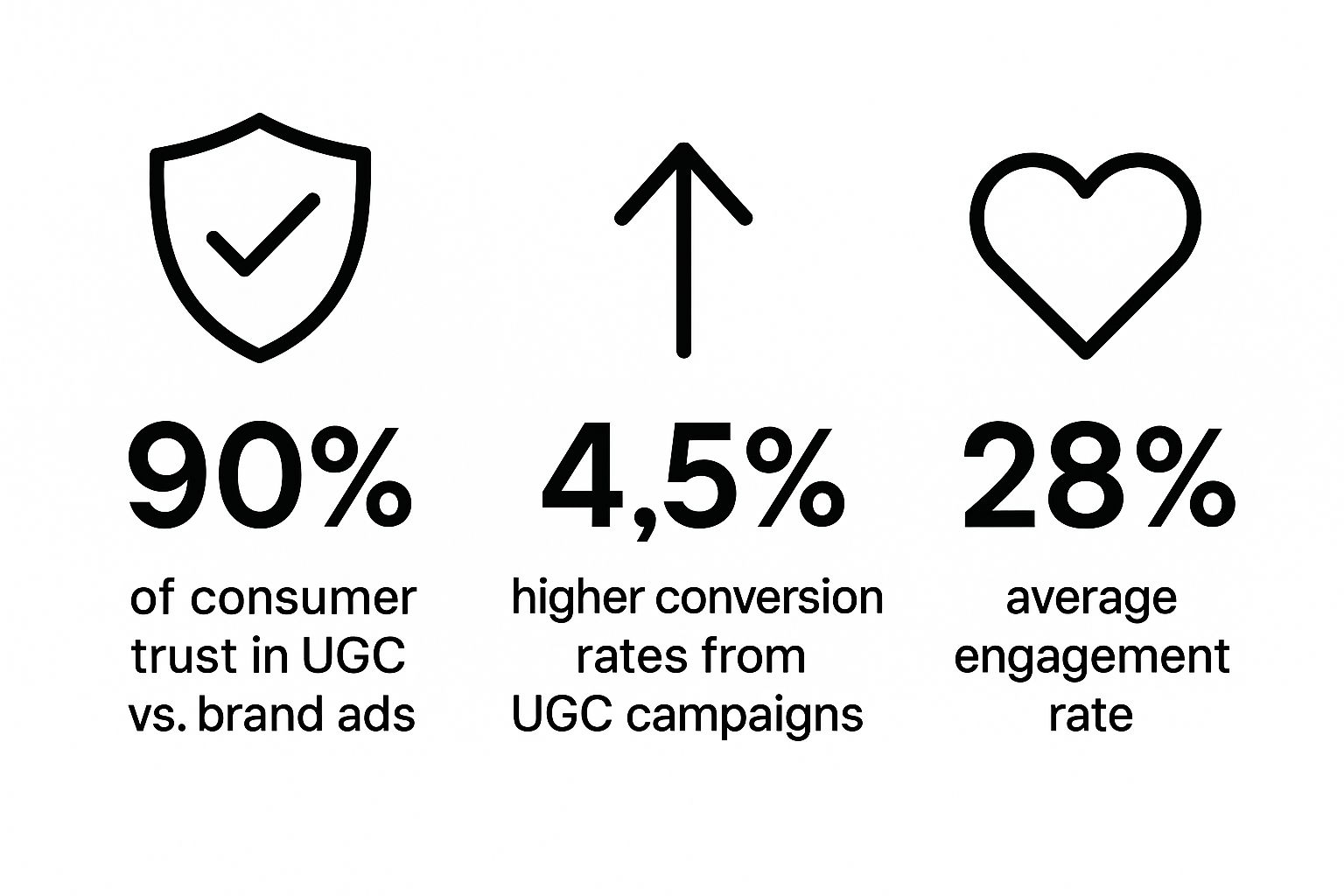
These are not vanity metrics. UGC is a practical, results driven tool that directly improves brand perception and sales.
Cost Effectiveness and Asset Diversity
Beyond the trust factor, working with UGC creators is smart business. Think about what it takes to produce a traditional commercial: a studio, a film crew, professional actors. The costs can run into the thousands, and you often end up with something that still feels like a commercial.
For a fraction of that budget, a brand can collaborate with several UGC creators. Instead of one polished ad, they have a whole library of marketing assets. They get many different videos and photos, each with a unique face, style, and perspective.
This variety is important for social media and digital advertising. Brands need a steady stream of new content to test in their ad campaigns to figure out what resonates with their audience. Your work provides the volume and diversity they need to run effective, data driven marketing.
The content you create is a versatile tool for brands. They can use your videos on TikTok, run them as Instagram ads, feature them on product pages, or include them in email newsletters, getting great value from their investment in your work.
The Market Is Growing Rapidly
If you're wondering whether this is a passing fad, the numbers tell a different story. The user generated content market was valued at over 7.6 billion** in 2025, which is a **69%** jump from **4.5 billion in 2024. This is a fundamental change in how brands are spending their marketing dollars. Projections show the market will pass $27 billion by 2029, so the demand for talented creators like you will grow. You can find out more about these UGC market statistics to see the full picture.
While your role is different from a traditional influencer, it is helpful to understand the wider creator economy. For more context on how brands partner with individuals, you can explore our guide to influencer marketing. Every video you film and every photo you take helps a brand build a more genuine relationship with its audience. You are the solution to modern marketing's biggest challenges.
How to Get Started as a UGC Creator

To start in the world of user generated content, you do not need a large following or expensive gear. Your biggest assets are your creativity and your ability to make content that feels real.
This roadmap will walk you through the essential first steps, from figuring out your strengths to landing your first paid job. We will cover how to build a simple portfolio that makes brands take notice.
Find Your Profitable Niche
First, you need to pick a niche. Think of it as your specialty. A clear niche helps you focus your energy and makes you a magnet for the right kind of brands. The easiest place to start is to look at the products you already use and love.
Your personal interests are your secret weapon. Are you obsessed with skincare, a fitness fanatic, a home chef, or a tech gadget guru? Your passion shows through, making your content more authentic and persuasive.
Here are a few popular and profitable niches to get you thinking:
- Beauty and Skincare: A large market where brands are always looking for real people to show off their products.
- Health and Wellness: From fitness apps and workout gear to supplements and mindfulness tools, this space is growing.
- Fashion and Apparel: Brands need creators of all shapes and sizes to show how their clothes look and feel in the real world.
- Home Goods and Decor: This covers everything from handy kitchen gadgets to stylish furniture and home organization hacks.
- Tech and Apps: Mobile apps and new electronics need authentic user reviews and tutorials to build trust.
Once you have a niche in mind, do some research. See what kinds of videos and posts are doing well. What are other creators making? What are brands sharing? This will give you a feel for the styles and formats that resonate, which is valuable when you start creating your own content.
Create Spec Ads to Build Your Portfolio
You do not need a paying client to start creating. The best way to show brands what you can do is by making spec ads. Think of them as sample commercials or practice projects. You create these on your own to build a portfolio that showcases your talent.
Grab a few products you already own within your niche and create short video ads for them. Pretend you were hired by the brand. Your goal is to show you can tell a compelling story, highlight a product’s best features, and do it all with an authentic vibe.
Your spec ads are your resume. They should instantly communicate your style, editing skills, and on camera personality. Three to five high quality spec ads are all you need for a solid starter portfolio.
Try to create a few different types of content. For example, you could film an unboxing video, a "how to" product demo, and a personal testimonial. This shows brands you are versatile and can handle different creative assignments.
Build a Professional UGC Portfolio
Your portfolio is your digital storefront. Brands will go there to see your work, so it needs to be clean, professional, and easy to look through. Brand managers are busy. Make your best work impossible to miss.
You do not need a fancy, custom coded website. A simple, effective portfolio is easy to create with free or low cost tools. The main goal is to display your spec ads, outline your services, and give brands a clear way to get in touch.
Here are two great options for building your first portfolio:
- Canva: Canva is a free tool for this. You can design a slick, one page website or a polished PDF to send to brands. It is user friendly and has many templates to get you started.
- Simple Website Builder: Platforms like Carrd are perfect for creating minimalist, one page sites that look great. They are easy to set up and give you a professional link to share.
If you are just starting, a simple checklist can help you stay on track.
UGC Creator Starter Checklist
Here is a quick glance table to guide you through the initial setup process. These are the core building blocks for launching your UGC career.
With these pieces in place, you will have a professional foundation ready to go. Your portfolio becomes your first impression, so make sure it loads fast, looks great on a phone, and clearly shows the value you bring to the table. Adding a short bio and a friendly photo helps brands connect with the person behind the content.
Once these steps are done, you are ready to start pitching your services to brands.
A Practical Guide to Finding and Pitching Brands
Your portfolio is sharp and it is time for the fun part: connecting with brands and getting paid. This is where the hustle begins, but there are a few established ways to land that first project.
The idea is to graduate from making spec ads for free to creating content for actual clients. Let us walk through the best strategies for finding brands that are actively looking for UGC creators like you.
Explore UGC Creator Marketplaces
Think of creator marketplaces as specialized job boards built for user generated content. Brands post projects here, detailing what they need, and you can apply to the ones that are a perfect fit for your style.
These platforms are a great starting point because you know every brand on there is already sold on the idea of UGC. It takes the guesswork out of wondering if a company is open to collaborating.
A few popular ones to check out are:
- Billo: A good platform if you are focused on creating e-commerce video content.
- Insense: Connects creators with all kinds of brands, often for paid ad campaigns.
- Fiverr: It is a large freelance site, but it now has a booming and dedicated category for UGC.
Your profile on these sites is your storefront, so make it count. Fill out everything, link back to your portfolio, and be clear about your niche. This helps brands discover you when they are searching for new talent.
Search Directly on Social Media Platforms
Sometimes the best opportunities are hiding in plain sight. Platforms like TikTok and Instagram are goldmines for finding brands that need a UGC content creator. You have to know what to look for.
Hop on your favorite app and start searching for terms like "UGC creator needed" or "hiring UGC creators." You will often find posts directly from brand managers or marketing agencies on the hunt for new creators.
Pro tip: Always filter your search results to show the most recent posts. This helps you find opportunities that are still open, not listings that closed weeks ago. Brands often move fast on these.
It also pays to follow accounts that act as aggregators, constantly sharing UGC jobs with their followers. Being part of these communities can give you an edge. For a more focused list of openings, you can also check out dedicated resources on how to find UGC creator jobs.
Send Direct Pitches to Brands You Admire
Want to work with a specific brand? Go tell them. Pitching brands directly is one of the most effective ways to get work. It allows you to target companies you are passionate about, which always makes for a more authentic and convincing pitch.
First, brainstorm a list of 5 to 10 brands in your niche that you love. These should be products you would be excited to feature. Head to their website and look for a marketing or press contact. If that is a dead end, LinkedIn is your best friend for finding the right social media or brand manager.
Keep your pitch email short, sweet, and focused on the value you bring. A brand manager's inbox is a crowded place, so you need to get straight to the point.
Here is a simple template you can change and make your own:
Subject: UGC video ideas for [Brand Name]
Hi [Contact Person's Name],
My name is [Your Name], and I'm a UGC creator who specializes in the [Your Niche] space. I have been a fan of [Brand Name] for a while, and I like your [Mention a specific product].
I create authentic, engaging video content that helps brands build trust and connect with new customers. Think real reviews, not polished ads.
You can see a few examples of my style in my portfolio here: [Link to Your Portfolio]
I have a couple of fun video ideas that I think your audience on [Platform, e.g., TikTok] would love. Are you open to a quick chat about how I could create some content for you?
Best, [Your Name]
This approach works because it is personal. It shows you have done your research, proves your skill with a direct portfolio link, and focuses entirely on what you can do for them. A little initiative goes a long way and will make you stand out.
How to Price Your UGC Services

Let's talk about the big question: how much should you charge? Setting your rates is one of the most difficult parts of becoming a UGC creator, but it is important for turning your passion into a real business. You need a pricing strategy that fairly compensates you for your work and talent while still being competitive.
There is no magic number. Your rates will shift based on your experience, the quality of your portfolio, and what each specific project demands. Let’s break down the common ways creators price their work and what factors should be on your radar.
Common Pricing Models
Most creators use one of three main pricing structures. Getting comfortable with these will help you offer flexible options that work for different brands and their budgets.
- Individual Content Rates: This is the most straightforward approach. You charge a flat fee per asset, like one video or one photo. It is perfect for brands that need a few specific things for a one off campaign.
- Bundled Packages: Brands rarely need just one piece of content. Bundles are a great way to sell multiple assets at once, say, three videos and five photos, for a set price that is more attractive than buying them all individually.
- Monthly Retainers: This is the best option for consistent income. A brand pays you a fixed fee every month for a pre-agreed number of videos or photos. You get predictable income, and the brand gets a steady stream of fresh content.
What to Charge for Your Content
When you are just starting out, it is tough to know where to begin with pricing. The key is to start with a baseline and adjust as you build up your portfolio and confidence.
A solid starting point for a new UGC content creator is in the 150 to 250 range for a single video. This covers your basic planning, filming, and editing time. Think of this as your floor, not your ceiling.
Here is a look at some typical price ranges to give you a better idea:
Key Factors That Affect Your Pricing
Your base rates are just the beginning. A few other important factors will push your final price up or down. Make sure you talk through these with a brand before you sign anything.
Usage Rights
This is a big one. Usage rights dictate how and where a brand can use your content. Your standard rate should cover their right to post on their own organic social media channels for a set period, like 30 to 90 days.
If a brand wants to use your video in a paid ad, that is a different situation. The price should increase. A common industry standard is to charge an extra 20% to 50% of your base rate per month for paid ad usage.
Exclusivity Clauses
Sometimes, a brand will ask you not to work with their direct competitors for a certain amount of time. This is an exclusivity clause, and it limits your ability to earn money elsewhere. Because of that, you should always charge a premium for it.
Project Complexity
Not all content is created equal. A simple testimonial video takes less effort than a multi step tutorial that requires different camera angles, detailed scripting, and complex editing. Always factor in the total time you will spend from brainstorming to final delivery.
The shift toward user generated content is not a trend; it is backed by numbers. Data shows that 87% of marketers already use UGC, and 93% of them say it outperforms the content they create themselves. It works because it directly sways the purchasing decisions of 79% of consumers, making it essential for any brand trying to connect with an audience today. You can read this full report on user-generated content statistics.
Got Questions About Being a UGC Creator? Let's Answer Them.
Starting as a UGC creator can be difficult, and you probably have a few practical questions. Getting those sorted out is the best way to begin your journey with confidence and avoid some common early mistakes. Let's tackle the questions that come up most often for new creators.
We will address the things that matter, like how many followers you need, what gear is essential, and the legal items that protect you and your work.
Do I Need a Huge Following to Get Started?
This is probably the biggest myth. Many people think you need a large social media following to be a successful UGC creator, but your follower count is almost completely irrelevant. Brands are not paying you to post on your personal channels. They are paying for content they can use on theirs.
What brands care about are your creative skills. Your ability to produce authentic, high quality photos and videos that resonate. This levels the playing field, making it all about talent and a good eye, not audience size.
A brand wants marketing assets that look like they came from a real, happy customer. A great portfolio will always beat a big follower count.
What Gear Do I Need?
You do not need a professional studio or expensive camera gear to start. Using slick equipment can backfire, making your content look too much like a traditional ad and losing that authentic UGC magic.
Your smartphone is your most important tool. The cameras on modern phones are great and can shoot the high quality content brands are looking for.
Here is a simple checklist of what you will use:
- A Modern Smartphone: A phone with a decent camera is your workhorse for both video and photos.
- Good Lighting: Do not underestimate the power of natural light from a window. It's free and looks amazing. If you need more consistency, a simple ring light is a great, affordable backup.
- Clear Audio: If you are talking in your videos, make sure people can hear you clearly. Filming in a quiet room often does the trick, but a cheap lavalier mic that clips onto your shirt is a fantastic small investment.
- Basic Editing App: You do not need fancy desktop software. Mobile apps like CapCut or InShot are powerful, easy to learn, and have everything you need to create engaging videos.
How Important Are Contracts and Content Rights?
Yes, they are very important. Think of a contract as a safety net for both you and the brand. It lays everything out, including expectations, what you need to deliver, and how much and when you will be paid. This helps avoid any confusion or disagreements later.
A key part of any agreement is the section on usage rights. This spells out exactly how and where the brand can use your content. For instance, if a brand wants to use your video in paid advertising campaigns, that is worth a lot more than if they are just posting it to their organic social media feed, and you should charge accordingly. Always read the contract carefully before you sign anything.
At Adworkly, we specialize in bridging the gap between innovative brands and talented creators to produce authentic content that fuels app growth. With our deep roots in ASO and performance marketing, we make sure your hard work gets in front of the right eyes for maximum impact. Find out how we can work together.